Chimney Sweep
A dust-controlled sweep that removes soot and creosote from the flue, smoke chamber and firebox.
Signs to look forBlack buildup · Smoke backing up · Weak draft
Request a quote → Call (206) 759-7977
Cleaner fireplaces, safer chimneys and straightforward service, seven days a week.
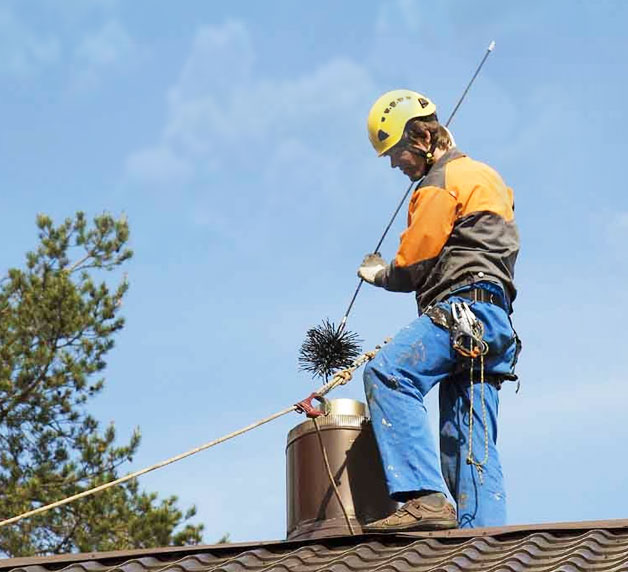
SeaTac wraps around the airport on the high ground of south King County near the Puget Sound shore, where the region’s wet, marine climate keeps masonry damp through a long heating season that lets steady rain find any gap in a crown, cap or flashing. The result is the pattern we see across south King County: creosote building up inside the flue while water works away at the structure outside.
SeaTac’s housing is largely mid-century, from Bow Lake and McMicken Heights to neighborhoods around Angle Lake and Riverton Heights. Many have masonry chimneys with aging clay liners, and plenty run gas fireplaces that still need annual attention. We work on both, and we explain what we find in plain language before anything is decided.
The core service: brushing the flue clean and clearing the creosote a long SeaTac heating season leaves behind.
Call (206) 759-7977A chimney sweep is the hands-on removal of soot and creosote from the flue, smoke chamber, smoke shelf and firebox, using rods and brushes sized to your flue — the service most SeaTac homeowners book before the first fire of the season.
Our long, wet heating season gives creosote months to build up, so a yearly sweep keeps the flue drafting properly and removes the glazed, tar-like layer that fuels chimney fires.
Cleaning goes beyond the flue — the firebox, glass, damper and hearth left ready to use.
Call (206) 759-7977Where a sweep focuses on the flue, a full cleaning addresses everything you see and touch: the firebox walls, glass doors, grate, damper and hearth. The buildup is a mix of soot, fly ash and creosote — plus the leaves, twigs and nesting debris that collect on the smoke shelf in a wet, wooded climate.
Standard vs. deep cleaning: a standard clean handles a season of normal use; a deep clean tackles heavy, glazed creosote or years of neglect. We explain the price before we start.
A documented look — often with a camera — so decisions are based on what’s actually there.
Call (206) 759-7977An inspection is a systematic check of the chimney’s structure, liner and connections, documented with photographs so you can see what we see.
For anything beyond the visible firebox, a camera scan sends a video probe up the flue. We share the photos with you directly — so a recommendation to repair is something you can see for yourself, not just take on faith.
From routine sweeping to structural repair, every service has a clear purpose and a straightforward next step.
A dust-controlled sweep that removes soot and creosote from the flue, smoke chamber and firebox.
Signs to look forBlack buildup · Smoke backing up · Weak draft
Request a quote →A complete cleaning of the chimney system, including the smoke shelf, damper area and firebox.
Signs to look forFalling soot · Damp odors · Debris in the hearth
Request a quote →Detailed cleaning of the firebox, glass, grate and surrounding area for a cleaner, safer fireplace.
Signs to look forSooty glass · Stained surround · Firebox debris
Request a quote →A documented inspection with clear photographs so you can see what we find before making decisions.
Signs to look forHome purchase · Long-unused fireplace · Suspected flue fire
Request a quote →Safe nest and animal removal, followed by practical prevention to keep the flue protected.
Signs to look forChirping sounds · Nesting debris · Sudden draft problems
Request a quote →Bottom-to-outlet vent cleaning that restores airflow and helps clothes dry faster.
Signs to look forLong cycles · Hot laundry room · Weak outside airflow
Request a quote →Repair of firebox panels, dampers, grates and other components that affect safe operation.
Signs to look forCracked panels · Stuck damper · Escaping heat
Request a quote →Diagnosis and repair of pilot, ignition, thermocouple and common gas fireplace problems.
Signs to look forPilot goes out · No ignition · Yellow or sooty flame
Request a quote →Repair and parging that restores smooth, sound surfaces above and around the firebox.
Signs to look forVisible gaps · Falling mortar · Persistent smoking
Request a quote →Repair or replacement of damaged clay and stainless liners, including relining for a new appliance.
Signs to look forClay fragments · Missing liner · New insert
Request a quote →Inspection, cleaning and refitting of caps and spark arrestors that protect the open flue.
Signs to look forLoose cap · Rust · Leaves in firebox
Request a quote →Standard and custom-fabricated cap replacement for single, unusual or multiple flues.
Signs to look forMissing cap · Rust-through · Nonstandard opening
Request a quote →Repair or replacement of the concrete crown that sheds SeaTac rain away from the masonry.
Signs to look forTop cracks · Concrete fragments · Water stains
Request a quote →Repair and resealing where the chimney meets the roof, a frequent source of chimney-area leaks.
Signs to look forCeiling stains · Attic moisture · Lifted metal
Request a quote →Breathable masonry protection that helps stop rain penetration while allowing trapped moisture to escape.
Signs to look forEfflorescence · Damp walls · Moss growth
Request a quote →Removal of failed mortar and careful repointing to protect the surrounding brickwork.
Signs to look forCrumbling joints · Loose sand · Open gaps
Request a quote →Targeted rebuilding of masonry that has deteriorated beyond a reliable repair.
Signs to look forLoose bricks · Leaning stack · Failed patches
Request a quote →Repair of framed chimney chases and replacement of rusted or poorly draining chase covers.
Signs to look forRust streaks · Standing water · Soft framing
Request a quote →Most repair calls in SeaTac start with a symptom, not a part name. Here's what those symptoms usually mean.
Seeing something on this list? Tell us what's happening and we'll walk you through the next step — no pressure, and a clear price before any work begins.
You should understand what is happening with your chimney before making a decision.
Call or send the short form. We will ask a few practical questions.
Covers go down before our equipment comes out.
We explain the condition and show you relevant photographs.
You receive a clear recommendation without unnecessary pressure.
Appointments are available throughout SeaTac and nearby King County communities.
★★★★★"Brad was very knowledgeable and fixed the chimney cap problem quickly and efficiently. The price was very reasonable."
★★★★★"They measured our chimney, fabricated the right cap and installed it beautifully. We could not be more pleased."
★★★★★"We were impressed with the chimney cleaning, pigeon nest removal and dryer vent cleaning. The honesty stood out."
Useful information before you schedule a visit.
Most fireplaces in regular use should be inspected and swept annually. SeaTac's long heating season can create steady buildup even when fires are not especially intense.
Common entry points include failed roof flashing, cracks in the crown, an unprotected flue and deteriorated mortar. We trace the likely entry point before recommending the repair.
Many older masonry chimneys use aging clay liners or may need an updated liner for a newer appliance. A camera inspection is the best way to understand the existing condition.
Yes. We remove blockages and can install the correct cap or guard to reduce the chance of the same problem returning.
Yes. Gas units do not create wood-burning creosote, but ignition components, burners, venting and safety controls still need attention.
We protect the working area before starting and use dust-controlled equipment throughout the visit.
Yes. We offer service seven days a week, Sundays included.
The final price depends on the appliance, access and condition. Tell us what you have and we will explain the next step before work begins.
Not quite. A sweep focuses on brushing creosote and soot from the flue; a full cleaning also covers the firebox, glass, damper and hearth. Many visits include both.
A standard sweep or cleaning usually takes about an hour. Heavy creosote, a camera inspection or repairs take longer. We give you a time estimate when you book.
Yes. Depending on the chimney we work from the firebox with dust-controlled equipment, from the roof, or both. Either way we protect the room before we start.
Usually a draft problem, a partly closed or stuck damper, a blockage, or a smoke chamber that needs attention. We find the cause before recommending a fix.
Yes. Wood-burning systems need creosote removal; gas units need attention to the pilot, burner, venting and safety controls.
We show you the buildup and explain the options. Glazed, third-degree creosote is a fire risk and needs a deeper clean or specialized treatment, which we price before starting.
Describe what you are seeing, hearing or smelling. We reply the same day.
(206) 759-7977 Seven days a week · Sundays includedProfessional chimney service across SeaTac and the airport-area south King County.
Explore each service we provide across SeaTac — every one with clear, honest information.
 Call Us